Yi Yang’s Interview
Starting date: 01.09.24
Nationality : China
Implementing Partner : Jülich Centre for Neutron Science
Main supervisor: Michael Ohl
Few words about you and your research project
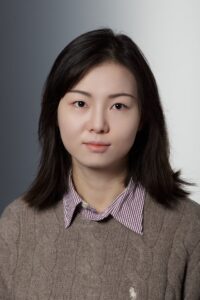
Hello, I am Yi Yang, a postdoctoral researcher at JCNS-1, Forschungszentrum Jülich.
I am a chemist, and my current research focuses on the microscopic structure of membrane electrode assemblies (MEAs) in fuel cells—particularly their transport structures and dynamics.
The goal of my research is to elucidate the relationship between microstructure, microdynamics, and macroscopic catalytic performance.
I plan to collaborate with VARTA, a leading battery manufacturer, to bridge the gap between fundamental research and industrial applications.
What is your background? How have you heard about GNeuS?
I completed my PhD in China at the University of Chinese Academy of Sciences, where I specialized in fuel cell catalyst research and advanced characterization techniques.
Through my doctoral work, I developed a strong background in material science and characterization with large-scale facilities.
I first learned about the GNeuS Project during discussions with renowned researcher at a conference, and he strongly recommended that I apply.
This exposure made me recognize GNeuS as an excellent opportunity to further develop my expertise.
Why did you apply specifically on GNeuS?
I applied to GNeuS because of its strong commitment to fostering interdisciplinary research and international collaboration, particularly within the field of neutron science.
I firmly believe that neutron scattering is a critical tool for probing the intricate microstructure of my catalyst system, and access to state-of-the-art facilities will greatly enhance my research capabilities.
Moreover, the supportive project network promises to accelerate my professional development and significantly impact my career.
I am confident that this fellowship will not only advance my research but also pave the way for long-term success in my field.
What impacts do you expect from the GNeuS fellowship?
I expect the fellowship to significantly transform my research career and advance the field of neutron science by enabling high-quality publications and innovative methodologies in fuel cell MEA research.
I plan to disseminate results through international conferences, workshops, and journals, while establishing strong collaborative networks with academic and industrial partners.
Ultimately, I aim to leverage these outcomes to further sustainable energy technologies, and facilitate technology transfer, ensuring that our research delivers both scientific insight and practical benefits.