Swapnil Prabhudesai’s Interview
Starting date: 13.01.25
Nationality : Indian
Implementing Partner : TUM
Main supervisor: Christopher Garvey
Few words about you and your research project
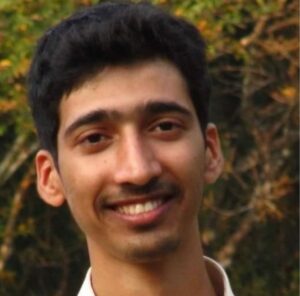
I am Dr. Swapnil Prabhudesai from India.
I received my PhD in solid state physics from Bhabha Atomic Research Center (B.A.R.C) in Mumbai, India, where I get specialized on the characterization of the dynamical features of the confined species using quasielastic neutron scattering (QENS) and molecular dynamics (MD) simulation techniques.
My primary area of study involves employing QENS experiments and MD simulations to describe the restricted dynamics of molecules.
I started working as a GNeuS postdoctoral fellow in January 2025, and Dr. Christopher Garvey is my supervisor.
As an alternative to other cryoprotective agents, my research will focus on the preparation and study of Deep Eutectic Solvents (DES) in lipid bilayers, as well as their unique cryoprotective effects, structural, and dynamical characteristics.
A deep eutectic solvent (DES), which is a biocompatible mixture of 1:3 proline and glycerol, is an effective substitute for water during the cryopreservation of biological cells; the mixture prevents the harmful expansion of water during freezing and exhibits increased cell viability.
Advanced neutron diffraction and complementary techniques will be used to thoroughly analyze the structural and dynamical properties of DES.
What is your background? How have you heard about GNeuS?
I worked on the project “Characterization of the dynamics of confined species using QENS and MD simulation techniques” while pursuing my PhD at B.A.R.C., Mumbai.
In many scientific and technological domains, knowledge of the restricted dynamics of species is crucial.
My coworkers told me about the GNeuS initiative.
Why did you apply specifically on GNeuS?
To broaden my knowledge of science and technology, specifically to gain proficiency in advanced neutron techniques and methodologies for the characterisation and application to various systems, I applied for the GNeuS call.
GNeuS will help me advance my career prospects because it is a well-structured program run by top organizations in the world, offering an interdisciplinary and intersectoral approach as well as collaboration with a variety of partner organizations, including neutron sources, research, academia, and industry institutions.
What impacts do you expect from the GNeuS fellowship?
I anticipate gaining more scientific knowledge and expertise from the GNeuS program to fully fabricate, characterize, and apply cutting-edge materials and technologies, with an emphasis on neutron scattering techniques and related approaches.
Through the project’s planned activities, I also hope to build new networks with colleagues from different scientific institutions and industry groups, as well as a contemporary, competitive skill set that I can use in both academic and industrial settings.
Furthermore, because the GNeuS fellowship offers a flexible personalized training program, I think it will enable me to greatly improve my soft skills, leadership, and project management.
I anticipate making ground-breaking discoveries in my field of study that will significantly affect the real world.
I am excited to publish my research in peer-reviewed journals in addition to the new findings.